





19 Countries, 1 Bag
Quick answer. One-bag travel means fitting a whole trip into a single carry-on backpack, so you never check luggage, never queue at the belt, and never juggle several bags between countries. It works for weekends and multi-month trips alike, and needs a durable 30 to 40 litre pack, a small rotating wardrobe, and simple internal organisation.
What is one-bag travel?
One-bag travel is packing everything you need for a trip into a single backpack that meets carry-on cabin limits on any airline. There is no checked hold bag, no roller-and-daypack combo, no extra shoulder bag on top. The pack stays with you gate to gate.
The practice has been around for decades, tied to journalists, long-haul backpackers, and anyone who could not afford to lose kit on the road. It has come back into focus over the last ten years as budget airlines have made checked bags expensive and cabin allowances central to the fare price. On the community side, the r/onebag subreddit crossed one million members in early 2025, and the method is now common among remote workers, students abroad, and city hoppers.
One-bag travel is not a rule about grams or minimalism for its own sake. It is a practical answer to the way most people travel now, short flights, weekly moves, working from the road, cabin-only fares. A single well-organised bag makes all of that faster.

Why does one bag beat several bags?
Travelling with one bag saves time, money, and mental load. You skip check-in queues, avoid checked-bag fees, keep control of your kit at all times, and move faster between countries.
The trade-off is packing discipline, since a smaller bag rewards planning and forces you to choose what stays home.
The direct benefits, on a two-week Europe trip:
- No lost bags. Your kit stays with you from gate to gate, with no risk of a hold bag missing a connection.
- No baggage fees. A cabin-only fare covers most European carriers on most fares, saving 30 to 60 euros per return flight.
- Faster transitions. Gate to hotel in under 30 minutes, hotel to train in under 10.
- Fewer daily choices. A capsule of layered items removes the morning decision about what to wear.
- Hands free. One pack on your back leaves both hands for tickets, phones, and coffee.
The downsides are real. You wear the same shirt more often, you wash more often, and some destinations, a wedding in a different climate for example, may not fit inside the plan. Most travellers who try it for one trip keep the method afterwards, for the same reason they took to it in the first place, everything is simpler once you commit to it.
How do you choose a backpack for one-bag travel?
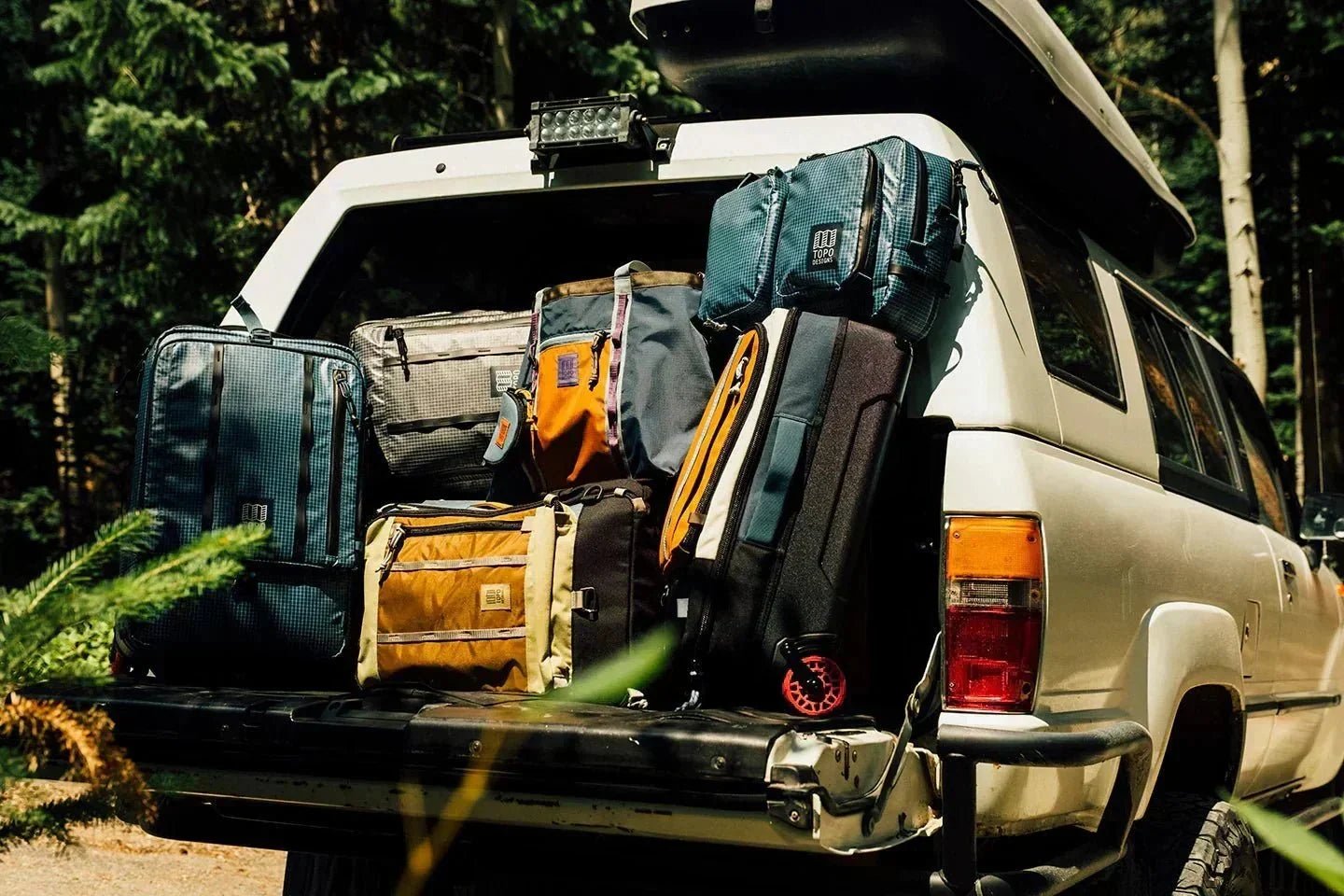
The right bag is a carry-on-sized backpack, usually 30 to 40 litres, with a shape that meets airline cabin limits and enough internal organisation to keep a two-week trip in order. Durability matters more than any single feature, since a pack failing halfway through a trip is the worst-case outcome.
Volume by trip length:
| Trip length | Bag volume | Bag type | Also good for |
|---|---|---|---|
| Weekend, 2 to 3 days | 20 to 25 L | Everyday backpack | Commute, day out, under-seat cabin bag |
| Short trip, 4 to 7 days | 30 to 35 L | Travel backpack | Overhead cabin, city break |
| Long trip, 1 to 4 weeks | 35 to 40 L | Carry-on travel backpack | Multi-country trips, one-bag Europe |
| Multi-month travel | 40 L max | Full-featured travel pack | Extended stays, digital nomad setups |
A pack in the 30 to 40 litre range hits the current airline cabin limits, which for most European carriers sit around 55 x 40 x 20 cm for the overhead locker allowance.
The three details that decide whether a pack works for one-bag travel are the shape, the opening, and the fabric.
A boxy pack that opens like a suitcase, with a clamshell zip rather than a top drawstring, keeps everything visible when you pack and lets you unpack in seconds at a hotel.
Fabric matters because a pack for one-bag travel spends its life crammed, dropped, and dragged across concrete. Recycled 1000D nylon and reinforced base panels take that wear without failing, and a padded laptop sleeve doubles as a work sleeve on the road.
Topo Designs makes a range of travel backpacks sized specifically for this use, from 30 to 40 litre carry-on travel backpacks to compact packs for shorter trips.

How do you pack for weeks with a single bag?
Pack layered clothing that works across warm days and cold nights, roll rather than fold, and use packing cubes to compress and organise.
Take three days of clothing on rotation, one pair of comfortable walking shoes, one lighter pair, and only the electronics you actually use every day.
A working one-bag capsule for a two-week Europe trip:
- 3 t-shirts, 1 long-sleeve, 1 mid layer
- 1 pair of trousers or jeans, 1 pair of shorts or lighter trousers
- 5 pairs of underwear, 5 pairs of socks
- 1 packable rain shell, 1 lightweight insulated jacket, 1 hat
- 1 pair of walking shoes worn on the plane, 1 pair of lighter shoes packed
- 1 dopp kit with liquids under 100 ml each, in a resealable bag
- Laptop, charger, adapter, headphones, phone cable
Rolling clothes rather than folding cuts volume by roughly 20 to 30 per cent and keeps most fabrics wrinkle-free, which is why it has been the default method for military packers and long-haul travellers for decades.
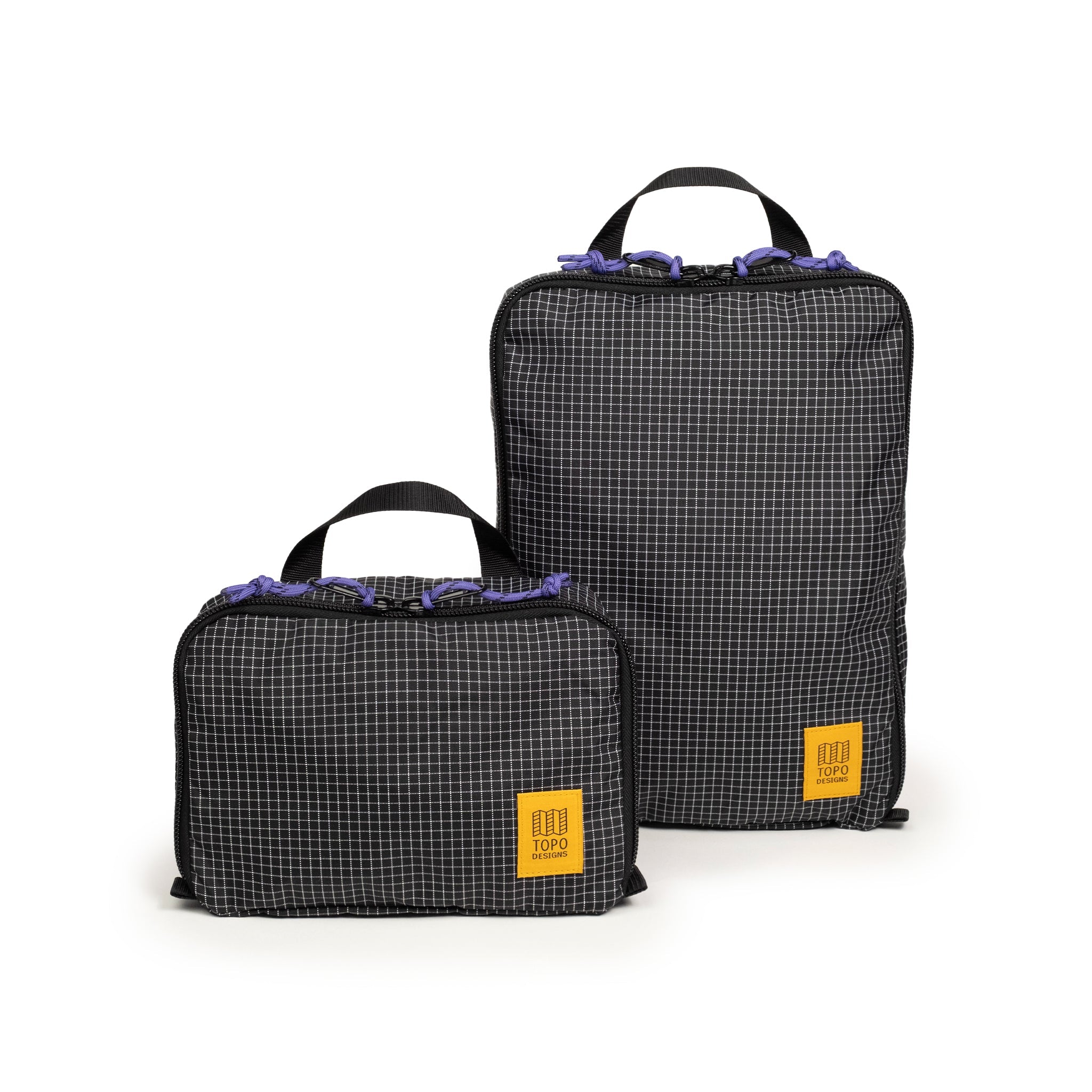
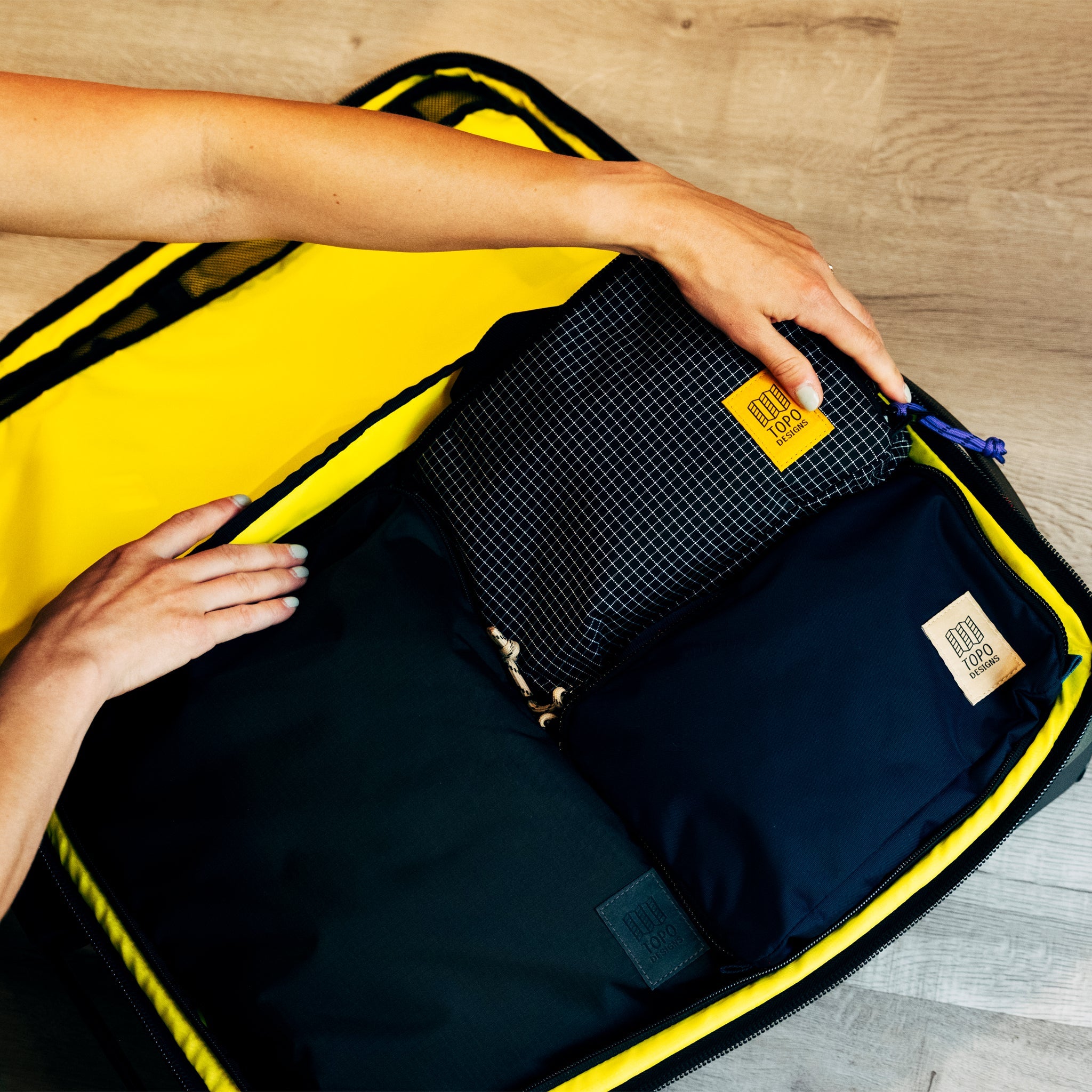
Packing cubes take it further by compressing rolled clothes into a slim, stable stack that keeps its shape when you pull one out at security.
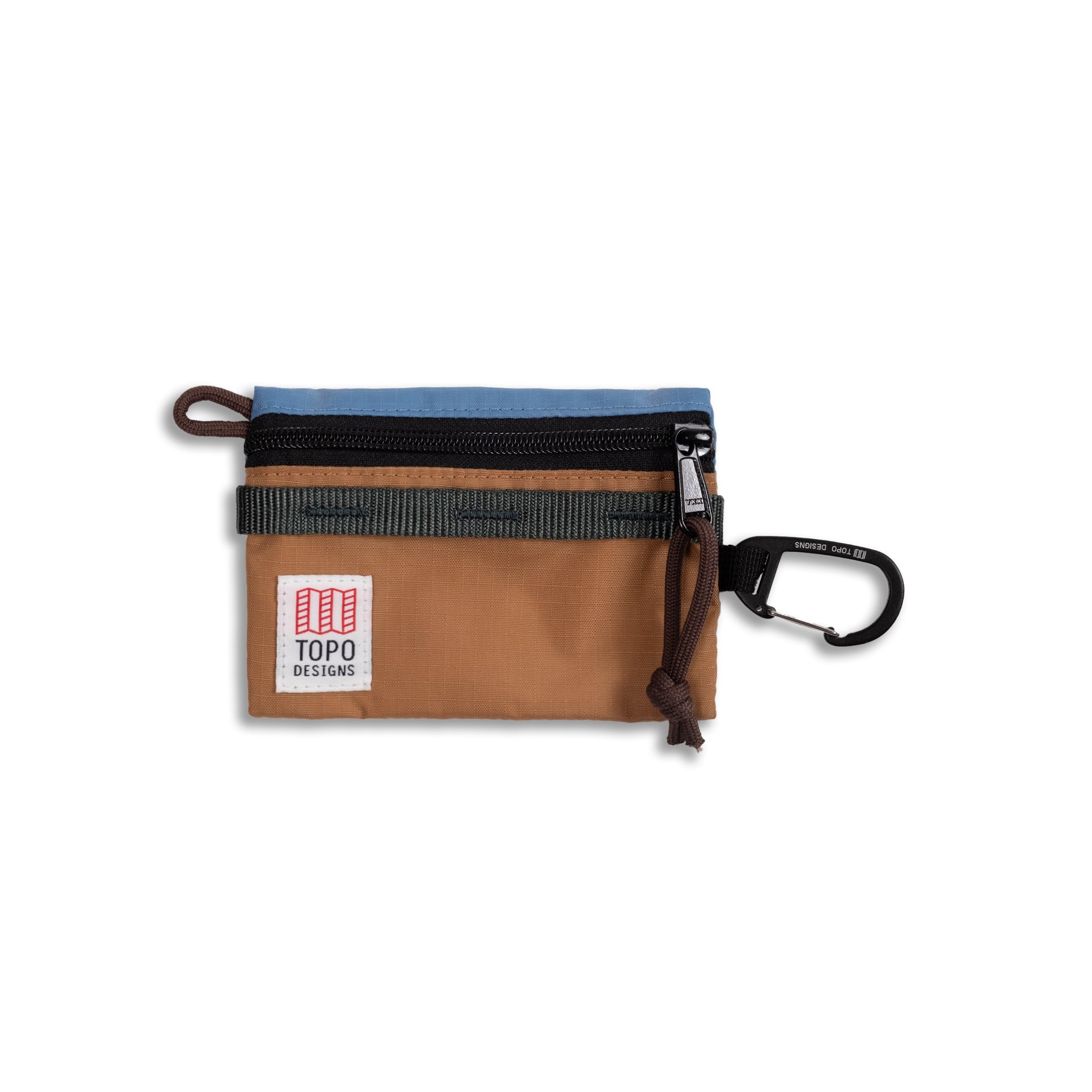
Group by category, one cube for tops, one for bottoms, one for underwear and socks, one for the dopp kit. Keep electronics and documents in the pack's dedicated laptop sleeve or a small crossbody accessory, so you never dig through the main compartment at customs or at the gate.
The point is not to pack less for its own sake. It is to pack in a way that stays organised for the whole trip, not just on the first day out of home. For a compact all-in-one, a multi-compartment travel backpack speeds this up further.
One bag, 19 countries: what Quinn Gordon learned
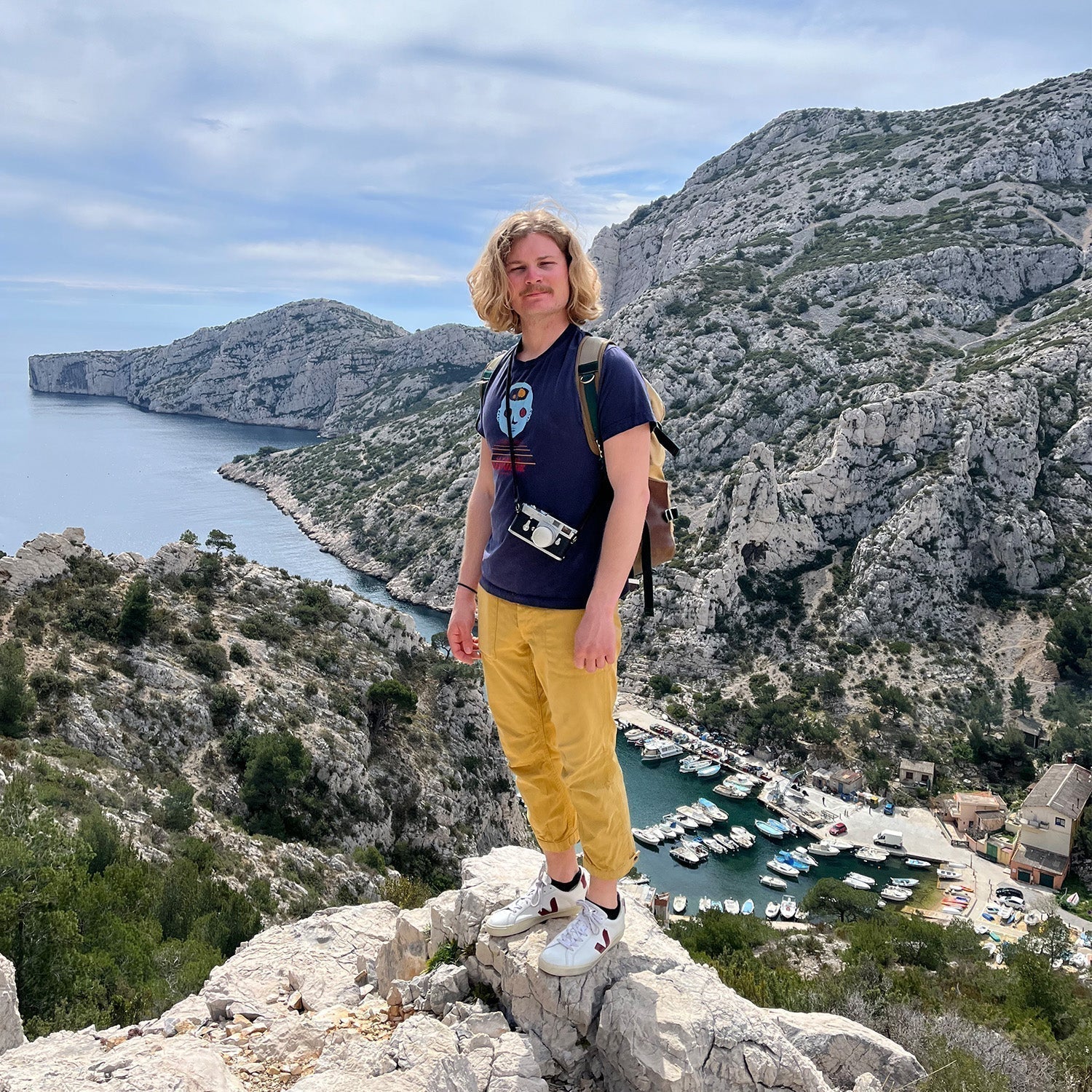
Quinn Gordon, a Topo Designs customer now based in Paris, has travelled to 19 countries over seven years with a single Klettersack. His bag has covered solo Balkan trips, US road trips, and grad-school life abroad. When it needed repair, he sent it in through Topo's MAP Guarantee program rather than replacing it. Below are the details of how he uses it.
Which countries has your Topo pack travelled through?
Over the past seven years, Quinn's Klettersack has visited Denmark, Germany, France, Belgium, Sweden, Norway, Iceland, Austria, the Netherlands, Switzerland, Morocco, Spain, Portugal, Ukraine, Croatia, Serbia, Bosnia, Kosovo, and Haiti, alongside road trips across the American Midwest and East Coast. Nineteen countries on one bag.
What sparked the travel habit?
Quinn's father backpacked across Europe in the 1980s and shared the stories at home. A summer studying languages in France as a teenager cemented the appetite. That, combined with a college rock-climbing hobby, turned travel into a habit rather than an occasional holiday.
What is always in the pack?
Chargers, international adapters, a Nalgene water bottle, a journal and pen, and, most of the time, a film camera. The kit changes little between weekend trips and multi-week travel. The discipline is not to add extras for longer trips.
What was the most memorable trip?
A four-day visit to Kyiv in spring 2019, booked on 75-dollar return tickets from Copenhagen. Ukraine was a few years past the Euromaidan revolution, and the country felt as though it was coming into its own. Quinn's bag also survived a two-and-a-half-week solo trip through the Balkans, including a 12-hour night bus through the Bosnian mountains into Belgrade.
After 19 countries, does the bag itself hold sentimental value?
Yes. Every stain and worn seam is a reminder of a trip. When the pack needed repair, Quinn sent it to Topo Designs' MAP Guarantee program rather than replacing it. Any recognised manufacturing defect is covered by the Topo warranty, and the repair extended the life of his Klettersack for future journeys. That is the field-tested philosophy, put simply, repair rather than replace.
Frequently asked questions
What size backpack do I need for one-bag travel?
A 30 to 40 litre pack works for trips of 3 days to several weeks, and a 20 litre everyday backpack covers weekends. Anything larger than 40 litres typically exceeds airline cabin limits and defeats the point of travelling without checked luggage.
Can you do one-bag travel with a laptop?
Yes. Most travel backpacks include a padded laptop sleeve for 13 to 16 inch machines. Choose a pack with a rear-panel or clamshell sleeve, so you can pull the laptop at airport security without unpacking the rest.
How many outfits should I pack for a two-week trip?
Three days of clothing on rotation is enough for a two-week trip if you have access to laundry every 4 to 5 days. Choose neutral colours that mix, layer for temperature swings, and keep the count low. A weekend backpack handles this comfortably at the 30 to 35 litre size.
Is a soft or hard-shell bag better for one-bag travel?
Soft. A structured backpack flexes into airline sizers where a hard-shell case cannot, and it carries better on trains, buses, and long walks. Every dimension the airline publishes still includes handles and side pockets, so measure the packed bag at its widest point.
How long does a good travel backpack last with heavy use?
A well-built travel pack in recycled 1000D nylon can handle several years of near-constant travel. Quinn Gordon's Klettersack covered 19 countries over 7 years before needing repair, then went back into service through Topo's MAP Guarantee. A repaired bag is often a better answer than a new one.
Key takeaways
- Choose 30 to 40 litres for most trips. A 20 litre everyday pack covers weekends, 40 litres is the cabin ceiling.
- Prioritise clamshell opening, padded laptop sleeve, and recycled 1000D nylon over feature count.
- Pack 3 days of layered clothing on rotation, roll rather than fold, and group into packing cubes.
- Wash on the road every 4 to 5 days, not before, so laundry does not shape the itinerary.
- Buy for repair, not replacement. A pack that can be sent back for a stitch or a zipper outlasts three cheaper bags.