




The "Don't Forget How to Pack" Hack
Quick answer. To pack for a trip, start with one versatile bag sized to the trip, then build a simple system inside it: shoes and trousers at the base, clothes rolled and grouped in pack bags, essentials in an outer pocket. Pack light by editing around laundry access, not worst-case days. A tote or hip pack handles your personal item.
How do you pack for a trip in three steps?
Packing for a trip comes down to three moves: choose one bag that fits the trip, build a repeatable system inside it, then pair it with a small personal item. Get those right and packing stops being a yard-sale on the bed and becomes a ten-minute routine you run for every trip, from a weekend away to two weeks abroad.
- Choose the bag. Match the size to the length of the trip, not to the biggest bag you own.
- Build the system. Base layer of shoes and trousers, soft clothes rolled and grouped, essentials on top and in outer pockets.
- Pair the bags. One main bag plus one small personal item you keep with you in transit.
The rest of this guide takes each step in turn, with a size table, a roll or fold breakdown, and answers to the questions people ask most before a trip.

How do you choose the right bag for a trip?
Choose the bag by the length of the trip and your access to laundry, then size down rather than up. A single versatile bag that clears the overhead locker beats a shelf of specialist bags, because it carries from the commute to the departures hall to the weekend without a swap.
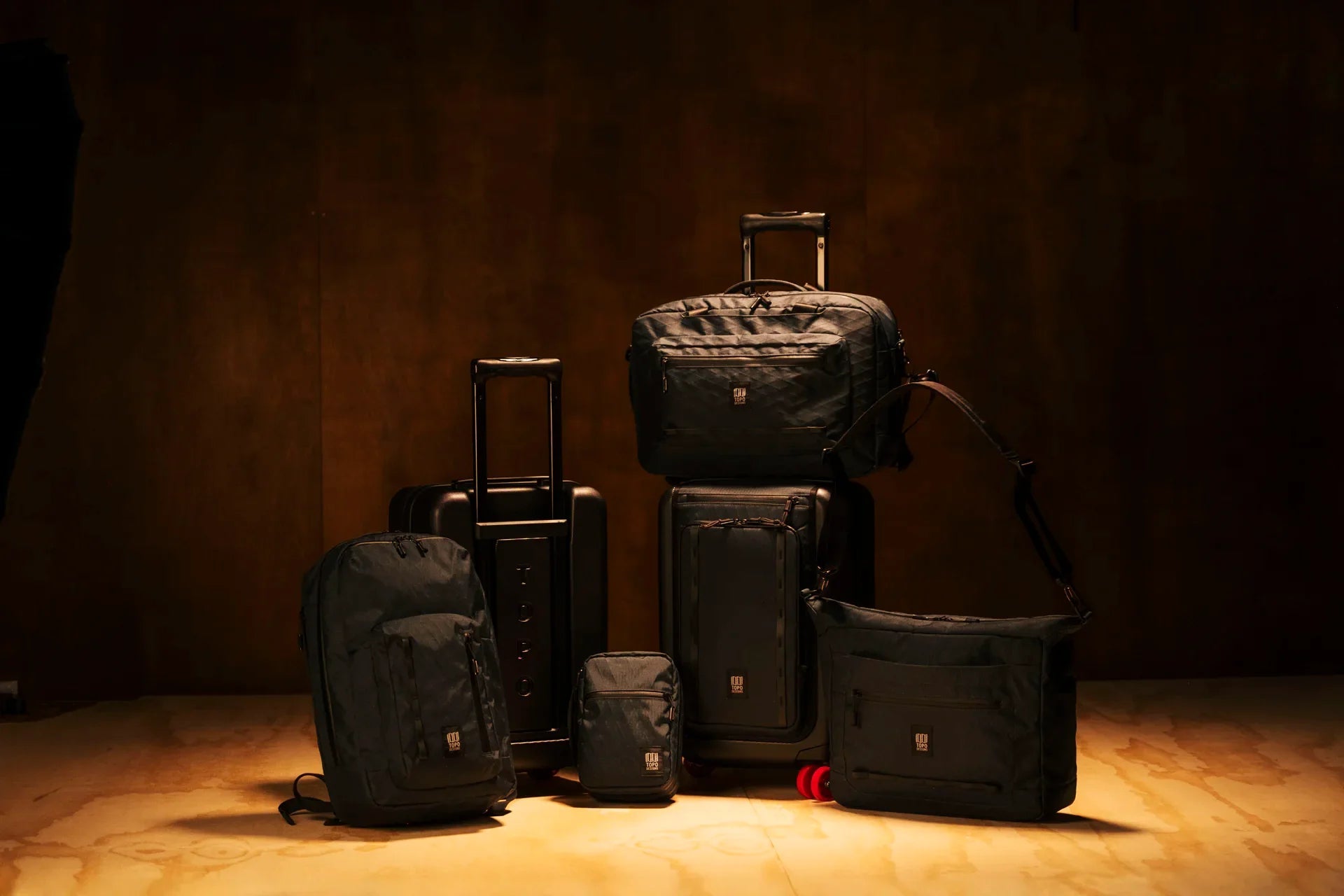
Trip length is the honest starting point. A day or an overnight fits a small pack of around 15 to 22 litres. A long weekend sits near 30 litres, the classic carry-on size. One to two weeks pushes towards 40 litres, still cabin-friendly on most airlines if you pack with a bit of thought. Only bulky kit or a longer stay needs a duffel of 70 litres or more, which usually goes in the hold. The trap is buying for the trip you take once a year, then carrying that empty volume on every other trip. Access to laundry changes the maths more than most people expect: a mid-stay wash halves what a two-week trip actually needs, which often brings it back inside a single carry-on. Our travel bags range is built around this one-bag logic, in sizes that hold their shape when packed flat.
| Trip length | What to look for | Rough volume | Topo range |
|---|---|---|---|
| Day or overnight | A small pack or a structured tote | Around 15 to 22 litres | Everyday backpacks, tote bags |
| Long weekend | A carry-on bag or travel pack | Around 30 litres | Travel bags, carry-on travel backpack |
| One to two weeks | A larger carry-on or a soft weekend bag | Around 40 litres | Travel bags, weekend bags |
| Two weeks plus, or bulky kit | A duffel for the hold | Around 70 litres | Duffel bags |
Volumes are a guide, not a rule, since how you pack matters more than the number on the label. For most trips of a week or less, a weekend bag or a carry-on travel backpack keeps you to the cabin and out of the check-in queue. For longer stays or bulky gear, a duffel bag carries more without turning rigid.
What is the best way to pack a bag?
The best way to pack a bag is to load it in layers, heaviest and flattest at the base, then group soft items so they hold their shape. A system beats cramming, because it spreads weight, keeps the bag balanced on your back, and means you can find one thing without unpacking the lot.
Here is the order that works for almost any bag:
- Base layer. Shoes along the bottom edges, trousers and jeans laid flat across the base. This builds a stable, level platform.
- Roll the soft stuff. T-shirts, casual tops, socks and underwear rolled tight, then slotted into the gaps around the shoes.
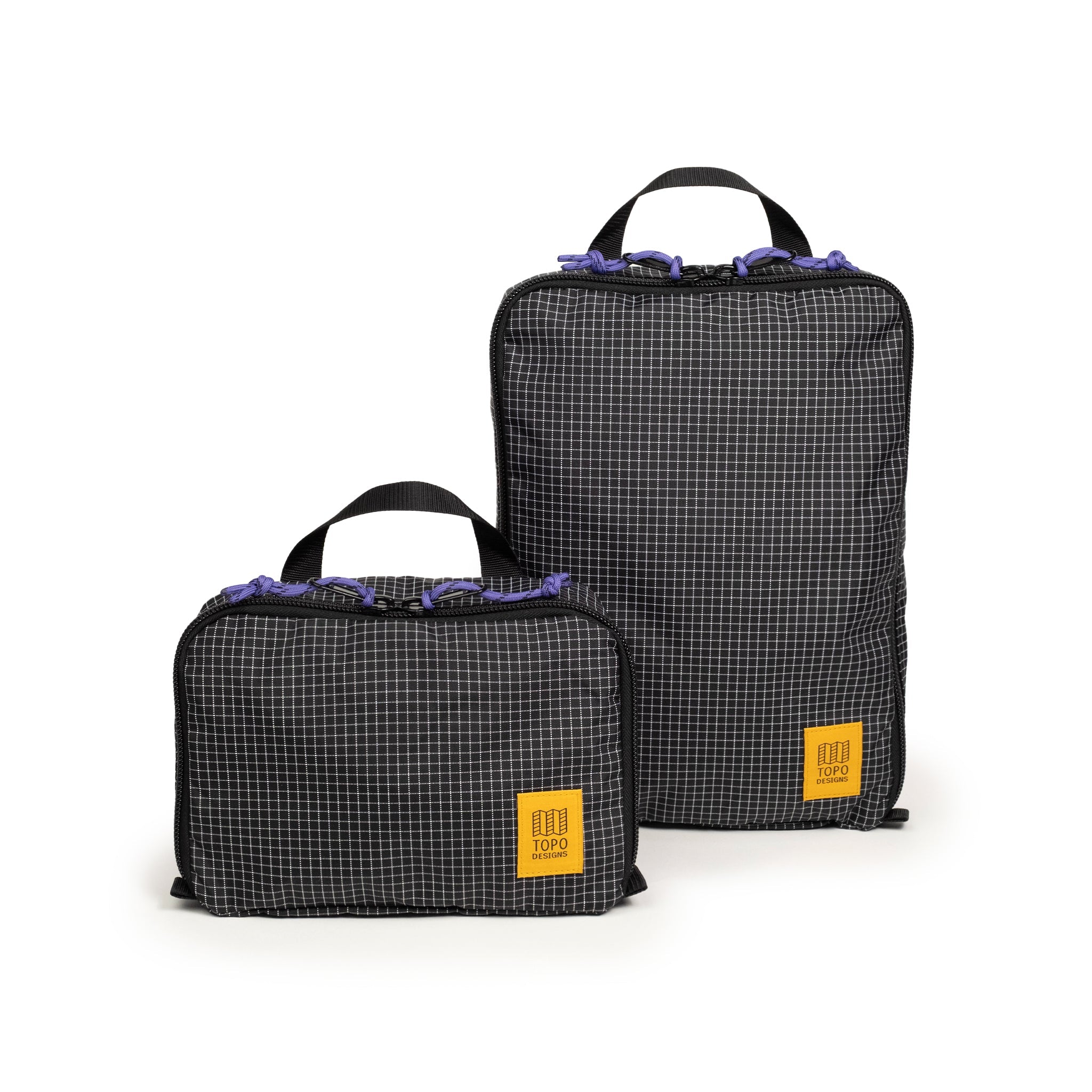
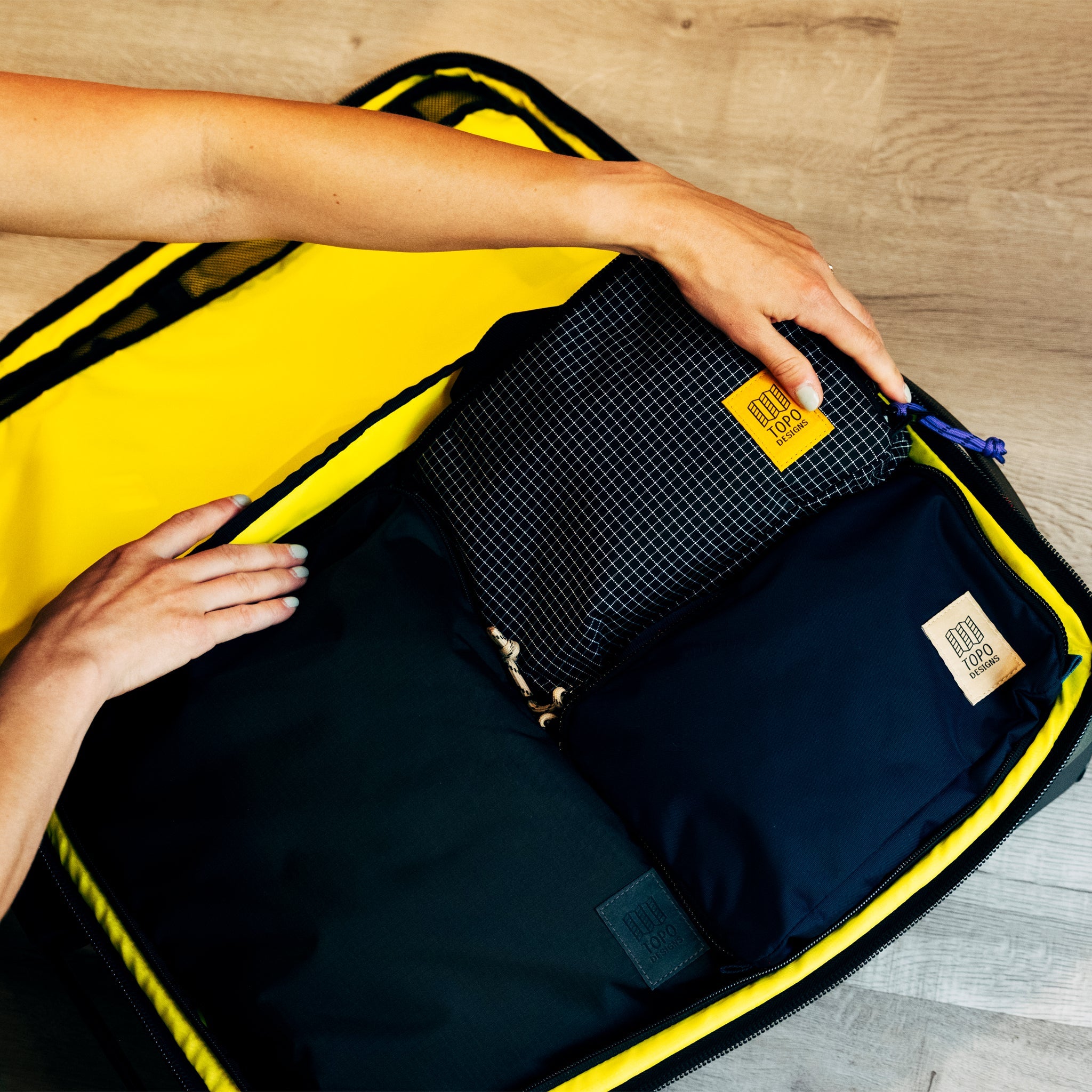
- Group with pack bags. Sort rolled clothes into pack bags by type, so a clean shirt is one zip away, not buried.
- Structured items on top. A shirt or a jacket folded along its seams sits flat on the upper layer, away from the crush.
- Essentials in reach. Passport, charger, headphones and liquids in an outer pocket you can open without disturbing the pack.
The reason this holds up on a real trip is balance and access. Weight low and central keeps a loaded bag from pulling on your shoulders or tipping when you set it down. Grouping clothes in pack bags does two jobs at once: it compresses soft items so they take less room, and it turns a single deep compartment into sortable sections, which is what stops the security-queue unpack. A rolled t-shirt also creases far less than a crumpled one, so a casual capsule comes out of the bag ready to wear. Repeat the same layout every trip and packing becomes muscle memory, the same base, the same groups, the same outer pocket, so nothing gets left on the bed because you were improvising.

Should you roll or fold your clothes?
Roll most soft, casual clothes to save space and cut creasing, and fold structured or tailored items along their seams to avoid hard crease lines. The best packers use both. Rolling wins on volume and on relaxed fabrics, folding wins on anything you want to look sharp on arrival.
| Item | Best method | Why |
|---|---|---|
| T-shirts, casual tops, socks, underwear | Roll | Saves space and fills gaps, minimal creasing |
| Jeans, trousers, shorts | Lay flat at the base, or roll | Builds a stable base layer |
| Dress shirts, tailored jackets | Fold along the seams | Prevents hard crease lines |
| Knitwear and jumpers | Fold loosely | Avoids stretching the shoulders |
A practical rule: if you would not iron it at home, roll it, and if you would, fold it. Pack the folded items last so they sit on top, flat and undisturbed.
How do you pack light without leaving things behind?
Pack light by editing your kit around laundry access and versatile clothing, not around every possible weather. Most over-packing is insurance against days that never come. Build a small capsule that mixes and matches, plan one wash, and the bag shrinks to a carry-on without you missing a thing.
A simple frame for a week keeps it honest:
- Tops: four or five, chosen to work with every bottom you bring.
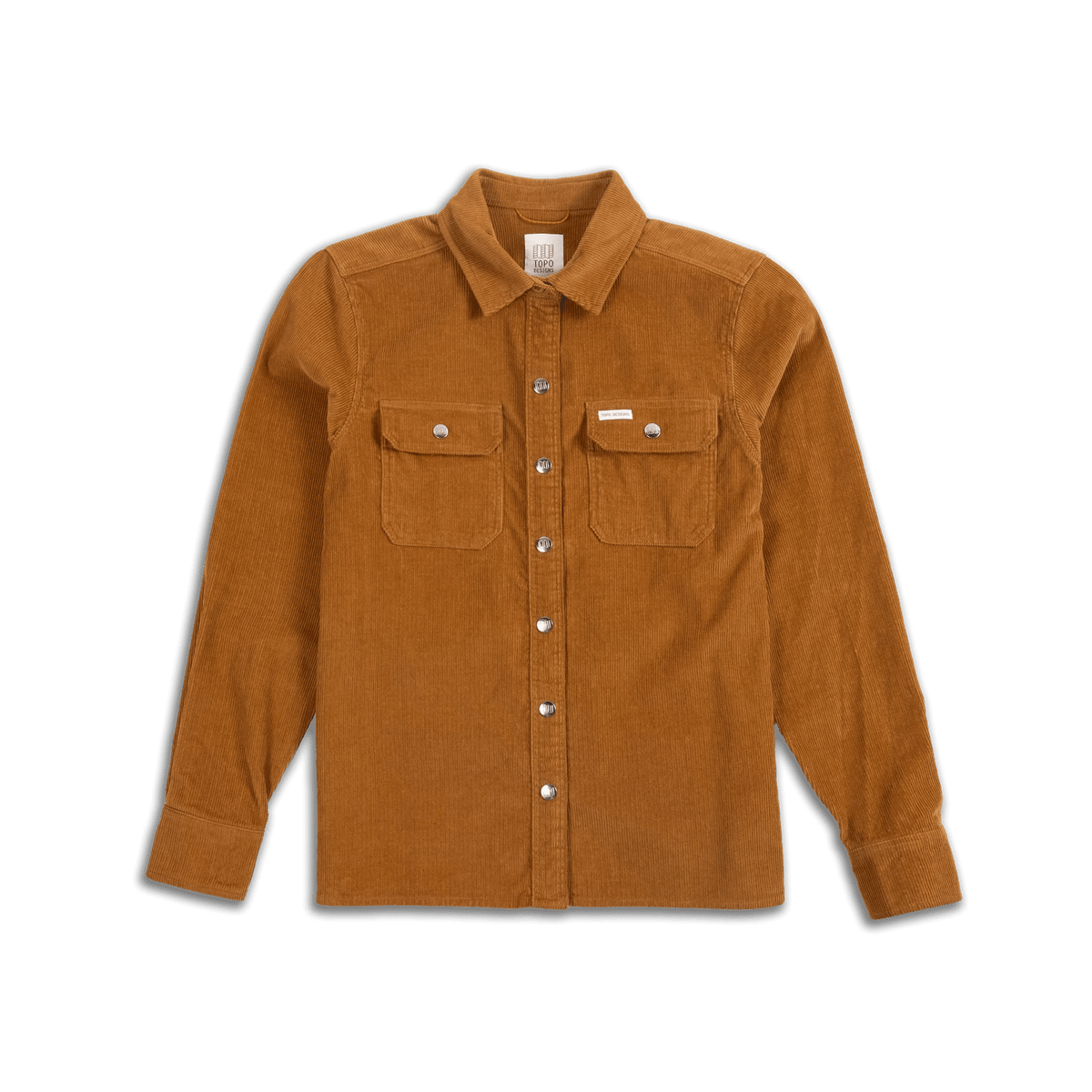
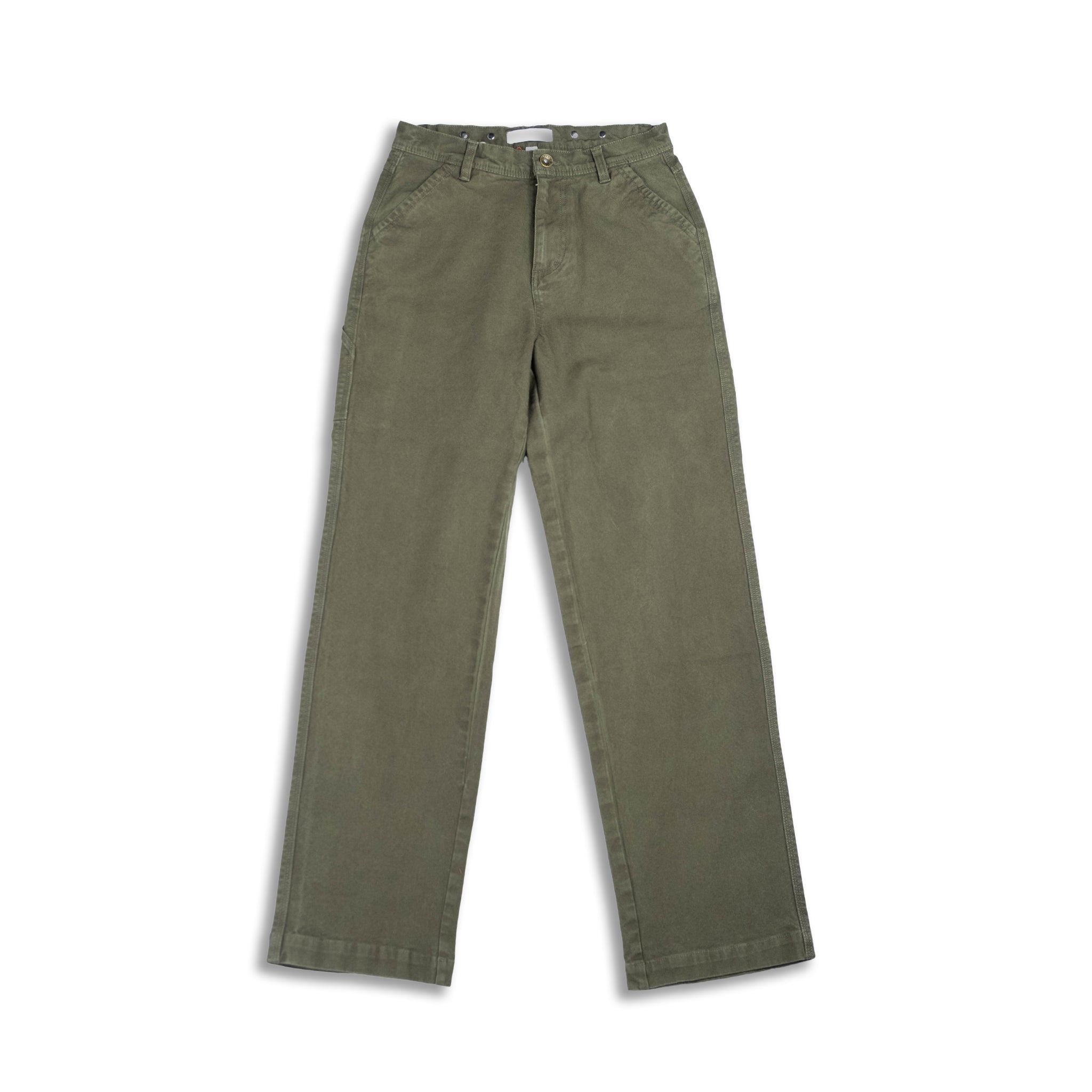
- Bottoms: two, one hard-wearing pair worn in transit, one spare.
- Layers: one warm layer and one that handles rain, both packable.
- Shoes: one versatile pair worn travelling, a second only if the trip truly needs it.
Everything earns its place by working in more than one setting, the town-to-trail idea that a single item should move from a café to a coast path without a costume change. Compress the soft layers into pack bags and the same clothes take noticeably less room. This is where one-bag travel earns its keep, one durable bag that adapts to the day rather than a stack of bags for different jobs. Topo Designs bags are built to last and made to be repaired rather than replaced, so a bag you size correctly today is one you keep for years of trips.

How do you pair bags for one-bag travel?
Pair one main bag with a small personal item that stays with you in transit, holding your passport, laptop, snacks and anything you want at your seat. This is still one-bag travel in spirit, the main bag holds the trip, the personal item holds the journey.
Two pairings cover most trips:
- Main bag plus a soft carry. A tote bag slides under the seat and doubles as a day bag once you arrive, so you leave the main bag at the hotel.
- Main bag plus an everyday pack. One of our everyday backpacks carries your in-transit kit out, then becomes the bag you actually use in the city.
Some travel bags remove the choice by carrying several ways on their own, as a backpack, over the shoulder, or with a pass-through sleeve that slides onto a roller handle. That flexibility is the point of a versatile bag, it adapts to how you move through a trip instead of forcing a new bag for each leg. Whatever you pair, keep the personal item small and specific, so it earns its spot under the seat rather than becoming a second suitcase.
Frequently asked questions
How many outfits should you pack for a week?
For a week, pack around four or five tops and two bottoms, all chosen to mix and match, plus one warm layer and one rain layer. That covers seven days when items combine into different looks and you plan one mid-trip wash. Packing full outfits per day is what fills a bag you never needed.
What should you pack at the bottom of a bag?
Pack shoes and heavier, flatter items at the bottom, with trousers or jeans laid flat across the base. This keeps weight low and central, so a loaded bag stays balanced on your back and does not tip when you set it down. Lighter, softer clothes and anything you want crease-free go on top.
Do pack bags and packing cubes actually save space?
Yes, mostly by compression and order. Grouping rolled clothes into pack bags squeezes out loose air so soft items take less room, and it turns one deep compartment into sortable sections. You gain the most on bulky, soft clothing, and you gain time too, since you can find a clean shirt without unpacking the whole bag.
What is one-bag travel?
One-bag travel means taking a single main bag for a whole trip, usually a carry-on, sometimes paired with a small personal item for the journey. It skips checked luggage and the wait at the belt, and it works when you pack a versatile capsule and one bag that adapts from transit to daily use once you arrive.
Key takeaways
- Size the bag to the trip, not to the biggest bag you own. A week or less usually fits a 30 to 40 litre carry-on.
- Pack in layers: shoes and trousers at the base, soft clothes rolled and grouped in pack bags, essentials in an outer pocket.
- Roll casual clothes to save space, fold tailored items along the seams, and pack the folded ones last on top.
- Pack light by planning one wash and building a mix-and-match capsule, not by insuring against days that never come.
- Pair one main bag with a small personal item for transit, and let a versatile bag carry several ways instead of packing a bag for each job.