






Article: How to Care for Your Pack
How to Care for Your Pack
Quick answer. To care for a backpack, keep it out of the washing machine and dryer, spot clean with warm soapy water and a soft brush, and only deep clean by hand when the pack is fully soiled. Use cool water on canvas to avoid shrinkage, and warm water on nylon. Clean the zippers separately, condition any leather details, and repair rather than replace when something breaks.
The two rules before you start
Two rules cover most of the damage done to a well-made backpack: no machine wash, and match your method to your fabric. Everything else follows from there.
- Never put a backpack in the washing machine or tumble dryer, and never use bleach on the fabric. Agitation, high heat and harsh chemicals damage stitching, coatings and any leather trim in a single cycle.
- Clean by hand and match the water temperature to the fabric. Warm soapy water suits most nylon packs. Cool water suits canvas, because warm water can shrink it.
A Topo Designs pack is built from durable, high-quality materials chosen to handle daily wear and tear, but even the toughest fabric needs a bit of upkeep to stay clean and functional. Getting these two rules clear first is what turns backpack care into a five-minute job rather than a rescue mission. If you own a canvas pack such as a Klettersack, the temperature rule matters even more, since heat is the single fastest way to shorten its life.

Should you put a backpack in the washing machine?
No. A washing machine ruins more backpacks than any other single mistake. The problem is not soap, it is agitation and heat combined with the way modern packs are built.
Three specific things go wrong in a machine cycle:
- Stitching and internal structure stress under mechanical agitation, straps and load-bearing seams take the brunt.
- Water-resistant coatings, laminates and DWR treatments degrade or peel.
- Hardware, zippers, buckles and metal loops, knock against the drum and mark the fabric.
The tumble dryer adds a second layer of damage. Heat shrinks canvas, weakens synthetic fibres and can crack any leather trim. Air drying at room temperature, hung with a towel below to catch drips, is the only safe way to dry a pack fully. This is why the whole industry, from technical brands to heritage makers, points to hand cleaning as the default. A pack designed to be field-tested for years, like those in our everyday backpacks range, deserves the two extra minutes it takes to clean by hand.
How do you spot clean a backpack?
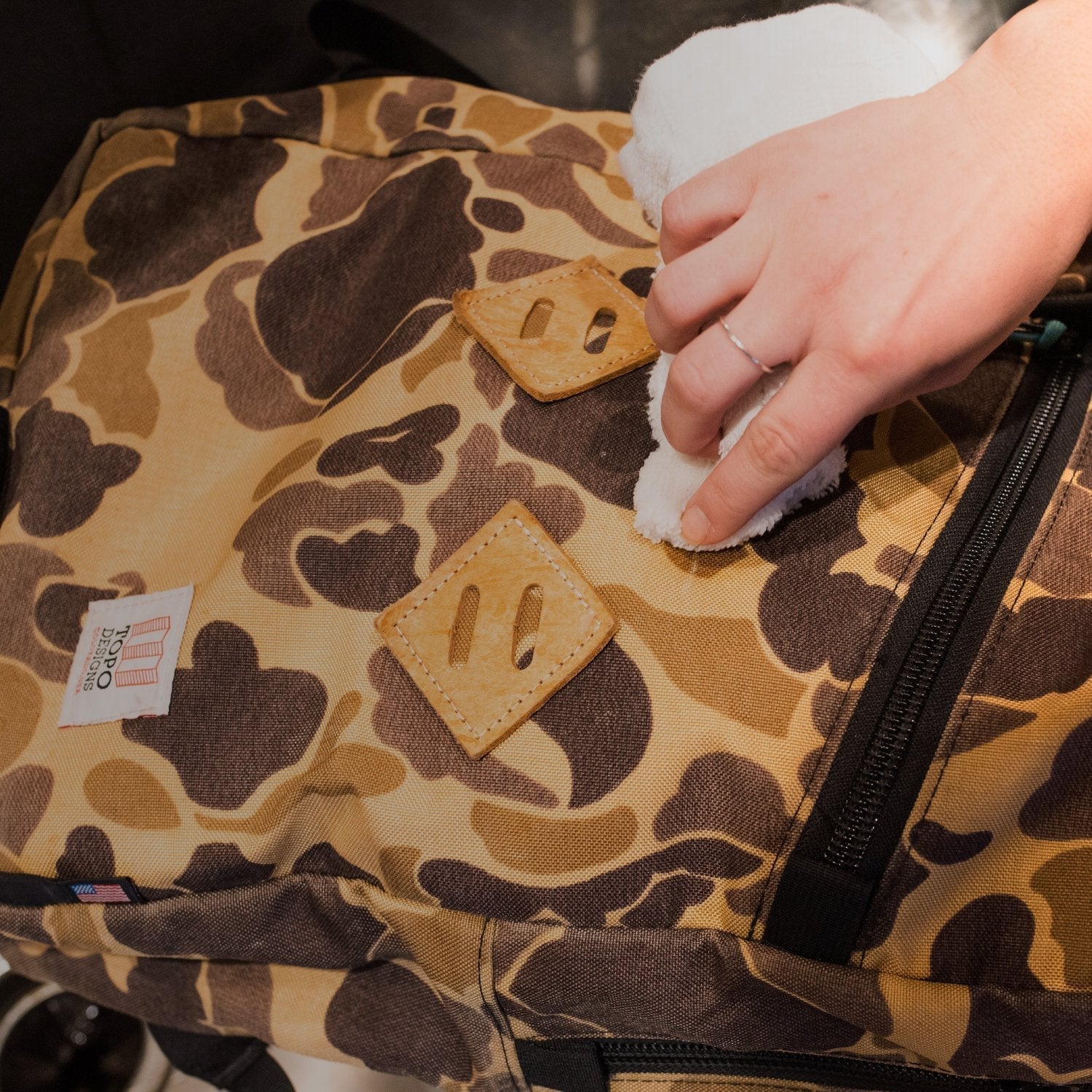
Spot cleaning is the routine you use most, and it is the least invasive. It handles food, mud, coffee marks and general grime without touching the rest of the pack.
- Empty the bag and open every pocket.
- Mix warm water with a small amount of gentle detergent or dish soap.
- Dab the mark with a clean washcloth soaked in the soapy water, do not scrub hard on the first pass.
- For anything sitting deeper than the surface, work the area with a toothbrush or soft brush in small circles.
- Rinse the spot with cool water, blot with a dry cloth, then let the pack air dry away from direct heat.
Test any new cleaning agent on a hidden patch first, the inside of a strap or a lower panel, before going near a visible area. Some prints and coloured canvases can fade with certain detergents. A quick weekly wipe on the base and straps stops grime from settling in, which matters more than any single deep clean. This is the routine that keeps a daily carry pack looking sharp between longer trips.

How do you deep clean a nylon or canvas backpack?
Deep cleaning is for when spot cleaning is no longer enough, after a muddy weekend, a spilled bottle inside a compartment, or a return from travel. The method depends on the fabric, and mixing them up is what shortens a pack's life.
| Fabric | Water temperature | Method | Watch out for |
|---|---|---|---|
| Nylon pack, no leather | Warm, soapy | Submerge in a tub, work stubborn spots with a soft brush, rinse with cool water, hang to air dry. | Never machine wash. Avoid direct heat when drying, no radiators, no hairdryer. |
| Canvas pack | Cool, soapy | Submerge in a tub, scrub gently with a soft brush, rinse cool, gently stretch the pack back into shape before hanging. | Warm water can shrink canvas slightly. Air dry only, do not tumble. |
| Pack with leather trim | Cool or warm depending on fabric | Spot clean fabric only, keep water off the leather, condition the leather separately. | Do not soak leather panels, do not use fabric stain remover on leather. |
Two things make deep cleaning safer. First, empty every pocket and unclip anything removable before you start. Second, dry the pack indoors in a well-ventilated room, hung upside down over a towel. Never speed things up with a heat source, overdrying cracks leather and degrades coatings. A pack cleaned this way keeps its shape, its finish and its structural integrity for the long haul.
How do you remove stains from a backpack?
For stains that soap and water will not shift, a fabric stain remover works on most cloth packs. The rules are simple, and they save you the price of a new bag.
- Choose a fabric stain remover without bleach, check the label twice.
- Never apply it to leather trim, only to fabric panels.
- Test on a small, well-hidden swatch first, wait for it to dry before treating the visible mark.
- Blot rather than rub, and rinse the treated area with cool water once the stain has lifted.
Certain stains, ink, red wine, oil, are worth treating within the first hour if possible. The longer they sit, the deeper the pigment or grease bonds with the fabric. If a mark persists after two rounds of treatment, stop, further scrubbing damages the weave more than it removes the stain. A pack that carries the mark of a real trip is often better than one bleached back to factory finish.
Zipper care, the step everyone forgets
Zippers are the most used part of a backpack, and the most neglected in care routines. Grit, salt and dust wear them out faster than fabric ever fails. Every Topo pack uses YKK zippers, the industry standard for resilience, but even the best hardware needs cleaning.
The routine is short:
- Wipe visible dirt from the zipper teeth with a damp cotton swab or a toothbrush.
- Work along the full length in both directions, teeth catch grit at the ends more than in the middle.
- Use a mild soapy water solution for stubborn build-up, then rinse and let the zipper dry fully open.
- If a zipper stiffens, run a graphite pencil along the teeth as a dry lubricant, avoid oil-based products that attract more dust.
Salt is the single worst thing for a zipper. After a beach day or a coastal trip, rinse the pack and its zippers with fresh water within a day or two, salt crystals lock into the teeth and corrode the runner. The same rule applies to snow-melt roads in winter, where road salt collects on any bag that touches the ground. Clean zippers slide, hold their shape, and stop being the first thing to go wrong on a well-used pack.

How do you care for leather details on a backpack?
If your pack has leather trim, the kind you find on many heritage-style backpacks such as the Rover Pack, a bit of conditioning keeps the material soft, scuff-free and water-resistant. Untreated leather dries out over the seasons, especially in central heating or dry cold.
Two products cover most cases:
- A leather conditioner such as Otter Wax keeps the leather supple and prevents cracks. Apply a thin layer with a soft cloth, work it in, wipe off any excess.
- A water and stain protector is worth adding if you live in a rainy climate. Test it on a hidden section first, some products slightly darken leather, and full application only after you have confirmed the colour.
If a leather-trimmed pack gets caught in the rain, let it air dry naturally. Never use a direct heat source, radiator, hairdryer or fire, they overdry the leather and cause it to crack within a few uses. A stitched leather patch is a repair-friendly detail, meaning a small tear or scuff can usually be fixed rather than written off. Our approach to materials and design starts from the same idea, choose things that age well and stay serviceable.
Repair rather than replace
Some damage will not wipe off, a rip, a torn strap, a broken zipper. That does not mean the pack is finished. A well-built backpack is repairable by design, and repairing is the most sustainable thing you can do with it.
Topo Designs runs a warranty and repairs programme for its packs and bags. Any recognised manufacturing defect is covered by our guarantee, and beyond warranty repairs, the aim is to keep well-loved packs in service rather than in landfill. This is what "built to last" means in practice, a pack you can send back for a stitched patch instead of buying a new one.
Three things worth doing before contacting a repair service:
- Clean the pack first, dirt makes damage look worse than it is, and a clean sample helps the repair team assess it.
- Photograph the issue and note when it appeared, a broken zipper on a five-year-old pack is different from a seam failure on a new one.
- Keep the original hardware if a buckle or clip has failed, matching replacements are easier when the original is on hand.
Repair over replace is not only a brand line, it is how a durable pack pays back over years of use. Every repair pushes the environmental cost of a new bag further into the future, which is the point of buying something built to last in the first place. It sits at the heart of our sustainability commitment.
Frequently asked questions
Can you wash a backpack in the washing machine?
No. A washing machine damages stitching, water-resistant coatings and any leather trim on the pack. Hand wash with warm soapy water for nylon or cool soapy water for canvas, rinse thoroughly, and hang to air dry away from direct heat.
How do you clean a canvas backpack without shrinking it?
Use cool water only, not warm. Submerge the pack in a tub of cool soapy water, scrub gently with a soft brush, rinse with cool water and gently stretch the fabric back into shape before hanging to air dry. Warm water is the main cause of canvas shrinkage.
How often should you clean a backpack?
Spot clean as soon as a mark appears, weekly for a daily carry pack. Deep clean once or twice a year for regular use, or immediately after a trip through heavy dirt, sand or mud. Cleaning zippers with a damp swab every few weeks stops grit from wearing them out.
How do you clean the inside of a backpack?
Turn the bag inside out where possible, or open every pocket flat. Vacuum out crumbs and grit first, then wipe the lining with a cloth dampened in warm soapy water. Let the interior dry fully before closing the pack, trapped moisture causes mildew.
Can a broken backpack zipper be repaired?
Yes, in most cases. A stuck zipper often only needs cleaning and lubricating with graphite. A separated zipper can usually be reset by squeezing the slider gently with pliers. A broken slider or a torn tape is a workshop repair, and worth sending in rather than replacing the whole pack.
Key takeaways
- Hand wash only, warm water for nylon, cool water for canvas, no washing machine, no tumble dryer, no bleach.
- Spot clean weekly to keep a daily carry pack in shape, deep clean only when soap and water on the spot are no longer enough.
- Clean zippers separately with a damp cotton swab or toothbrush, and rinse the pack after any exposure to salt.
- Condition leather trim with a suitable leather product, keep water and stain remover off the leather panels.
- Repair rather than replace, a well-built pack is designed to be serviceable, and repair is the most sustainable option.
Sources
- YKK Group, Fastening Products, manufacturer of the zippers used across Topo Designs packs.
- Otter Wax, Leather Care Guide, third-party leather conditioning reference.
- Topo Designs Europe, Warranty and Repairs, official brand programme.